


Watch the Video for “Summer’s Almost Gone”
Track Info: Summer’s Almost Gone 3:38 (FCC Clean/No Explicit Lyrics)
Genre Tags: Power Pop, Indie Pop, Guitar Pop, Psych-Pop, Jangle Pop, Sunshine Pop
RIYL: The Lemon Twigs, Teenage Fanclub, Matthew Sweet, Young Guv, The Apples In Stereo, The Raspberries, Sharp Pins
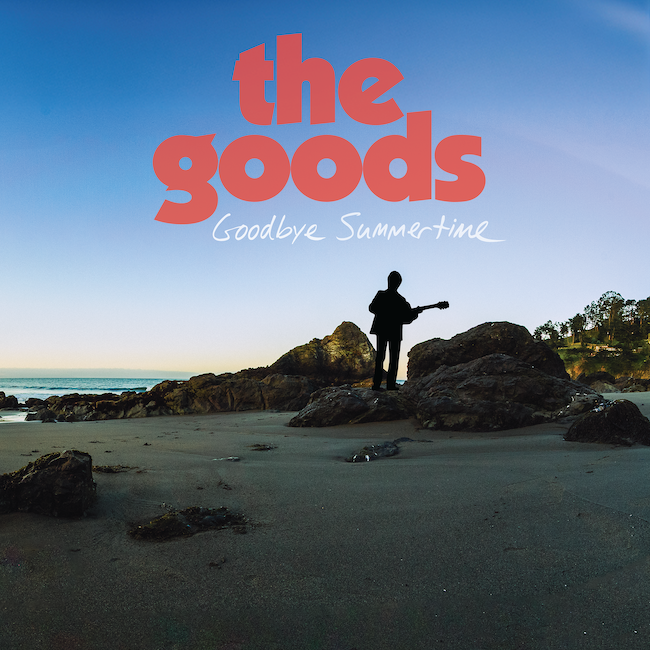
Oakland, California power pop outfit The Goods return July 22 with “Summer’s Almost Gone,” the first single from their upcoming LP Goodbye Summertime, due September 16 on Dandy Boy Records. Less than a year after releasing their debut full-length Don’t Spoil the Fun, songwriter Rob Good pushes the project into new territory, folding Beatles-esque psychedelia, jangling folk rock, sunny indie pop, and the melodic punch of classic power pop into something far bigger than what came before. For fans of The Lemon Twigs, Teenage Fanclub, Matthew Sweet, Young Guv, and The Apples In Stereo, “Summer’s Almost Gone” is the first glimpse of an album written during a period of dramatic personal change and creative obsession.
Built around ringing guitars, soaring vocal harmonies, and the crack of a snare that pushes the song forward, “Summer’s Almost Gone” captures the feeling of watching time slip by faster than you’d like. The song arrives with a simple but urgent message. “Now is all we have,” says Good. “The present is slipping away, the future isn’t guaranteed, so what are we waiting for?” It’s a sentiment that feels especially at home in the Bay Area, where entire neighborhoods seem to change overnight, beloved venues disappear, and another summer can vanish somewhere between a late-night drive across the Bay Bridge and the last BART ride home.

For longtime followers of The Goods, the new material feels like a natural progression rather than a sharp left turn. The hooks are still there. So are the harmonies and jangling guitars that have defined the project from the beginning. What’s changed is the scope. Working from his Oakland studio, Good handled the bulk of the performances himself while bringing in key contributions from longtime collaborators Cherron Arens, Yea-Ming Chen, and Ian McBrayer. The songs stretch further, the arrangements take more chances, and the sound reaches well beyond the power pop framework of earlier releases. It’s the work of a songwriter expanding his palette without losing sight of melody, heart, or the thrill of a perfectly placed hook.
Good has spent years as a fixture of the Oakland underground through his work with Ryli, Joel Cusumano, Yea-Ming and The Rumours, and Cocktails, while quietly building a reputation as one of the area’s sharpest songwriters. With The Goods, he’s carved out a space that feels equally informed by decades of guitar pop history and the communities that shaped him. There are echoes of British Invasion melody, the Bay Area’s current indie pop resurgence, and long afternoons spent digging through record bins, but the songs never feel trapped in nostalgia. They’re rooted in the present, even when looking to the past. While “Summer’s Almost Gone” stands on its own as a hook-filled summer anthem, it also hints at the wider scope of Goodbye Summertime. Produced by Good in his Oakland studio and mixed and mastered by Bart Thurber, the album expands The Goods’ sound well beyond the jangling power pop of earlier releases, bringing psychedelia, folk rock, sunshine pop, and ambitious studio experimentation into the mix. The result feels less like a calculated reinvention and more like a record collector finally giving himself permission to pull every favorite LP off the shelf at once.
Opening / The Single
“Summer’s Almost Gone” feels both urgent and wistful at the same time. You described the core idea as “Now is all we have.” Was there a specific moment—or series of moments—in the Bay Area that crystallized that feeling for you while writing the song?
I’ve just been thinking a lot about the passage of time lately in general. I went through a breakup during the making of the album, and I lost my grandma last year, who I was really close to, and I guess it really made me feel the impermanence of things.
The track has that classic power-pop forward motion (the snare, the ringing guitars) but also a sense of things slipping past. How intentional was the balance between the bright, almost celebratory surface and the more melancholic undercurrent?
I’ve always liked a song that sounds sweet but is tinged with some melancholy when you peel the layers back a bit. I don’t know if it was intentional per se, but it does tend to be the mode I work in.
The Album & Creative Evolution
Goodbye Summertime arrives less than a year after Don’t Spoil the Fun. That’s a fast turnaround. What changed—personally or creatively—that made this record feel necessary to make so quickly?
I really made both records at the same time and just opted to release Don’t Spoil the Fun first. It was a very prolific period of time for me. My whole life got turned upside-down with the end of one relationship and the beginning of another, and I was basically living at my recording studio, just writing and recording all the time.
The press materials talk about folding in Beatles-esque psychedelia, jangling folk rock, and sunshine pop while still keeping the power-pop DNA. Was there a particular record or period of listening that gave you permission to expand the palette this far?
I was really inspired by McCartney, Paul McCartney’s first album. I love that album, but more than any specific sonic or musical influence, I was inspired by the notion of just holing up and making whatever music you want to make, by yourself in your own space. That concept felt very freeing to me.
You produced the album yourself and had Bart Thurber mix and master. How did working with Bart shape the final sound, especially on the more ambitious or experimental tracks?
Bart really “got it” right away. I think his strength is seeing the potential of every song and what needs to be brought out in the mix to really make a song shine.
The album title Goodbye Summertime feels like both a seasonal farewell and something more permanent. Without spoiling too much, how does the rest of the record continue or complicate the themes introduced on the single?
A lot of the album is about change, and although change can be good it can also be painful, and you can mourn the loss of what you had to leave behind to get to a better place. But saying “goodbye” to something also means saying “hello” to something new, so it’s ultimately hopeful, if somewhat bittersweet.
Songwriting & Personal Context
The release notes mention the songs were written during a period of “dramatic personal change and creative obsession.” Can you talk about what that period looked like day-to-day, and how it affected the way you approached melody and arrangement?
I spent a lot of time in the studio, by myself with my guitar, just writing and recording. I think the emotional intensity and upheaval of that period of time needed to be channeled somewhere, and I was able to channel it into the music.
You’ve spent years in the Oakland underground with Ryli, Joel Cusumano, Yea-Ming and The Rumours, and Cocktails. How has moving between those projects informed what The Goods has become on this record?
I’m really lucky to have so many talented friends, and they all have a unique style and artistic voice. Both Yea-Ming and Joel are among the most unique artists I know. The main thing I take from them is the importance of being unapologetically yourself.
There’s a line in the materials about entire neighborhoods changing overnight and beloved venues disappearing. How much of Goodbye Summertime is a document of a specific place and time in the Bay Area versus a more universal feeling of time running out?
It’s not about the Bay Area really, though being from here that influence is certainly felt. The feeling of time running out is more individual, more personal, like talking to a specific person and saying “let’s make the most of what little time we have together.”
Sound & Influences
The RIYL list (Lemon Twigs, Teenage Fanclub, Matthew Sweet, Young Guv, Apples in Stereo, Raspberries, Sharp Pins) is pretty specific. Which of those artists or records were you actually living with while making this album, and which ones are more about shared DNA than direct influence?
The harmonies on “Summer’s Almost Gone” are a big part of its lift. How do you approach vocal arrangement when you’re primarily tracking yourself—do you write the parts in advance, or do they emerge in the studio?
Most everything is arranged on-the-spot in the studio. I enjoy that kind of spontaneity.
The song has a real sense of propulsion without ever feeling rushed. How much of that comes from the arrangement versus the way the song was tracked and mixed?
I think it’s both. I definitely think a lot about how to present things sonically. At the end of the day, a good song is a good song, but the right production and arrangement can help make it great. “Summer’s Almost Gone” has a very dirty, crunchy drum sound that gives it a unique character, especially when cast against the prettier guitars and harmonies.
Looking Ahead
This feels like a record that wants to be heard loud and with other people. Are there plans for live shows that expand the studio versions, or are you thinking more in terms of smaller, more intimate presentations of this material?
We’ll be touring Europe this September and October along with Joel Cusumano, as well as playing a handful of shows in the Bay Area. The live band is distinct from the record, especially since it’s a different batch of players for the most part, and so we’re reinterpreting things in a way that suits the intuition of the players. If anything, we’re pushing the dynamics more than on the record – the intimate moments are more intimate and the bombastic moments are cranked up to 11.
Dandy Boy Records has been a good home so far. What has working with the label allowed you to do differently this time around?
Bobby (the head of the label) has been a close friend for many years, and his support means everything. He ultimately just wants to put out good records, and his tastes are very broad, so he’s always really supportive of new directions we explore.
Finally—when someone puts on Goodbye Summertime for the first time in September, what do you hope they walk away feeling that they maybe didn’t feel after Don’t Spoil the Fun?
I would hope that if somebody likes our first record they’ll like this one as well, but hopefully they’ll be pleasantly surprised at some of the ways in which the sound has evolved.