


Kalmo Interview by James Lowe
Interview response by Mika, vocals.
Section 1: The Origins of "Feeding the Worms"
Q1. What was the emotional or philosophical spark behind this song?
A1: The song is already about three years old. Thinking back, I recall having the tagline
"In hell the worms don't die" in my lyrics notebook. The story started to evolve around that,
with horror-like mental images. Condemnation — and all the varieties of horror that come
with it — is one of Kalmo's core themes.
Q2. What does "Feeding the Worms" symbolize to you personally?
A2: Kalmo explores the horrors and humanity's darker side on Earth, and also in imagined
worlds like heaven and hell. It has also a dash of biblical tone to the lyrics. For me, this is
one of the best songs I composed during the writing season a few years back.
Q3. Born from a riff, lyrical concept, or atmosphere first?
A3: It originated from a mental image of worms consuming humans. I had that as a set of
notes, pieces of lines, in my lyrics notebook for some time. Then came the intro riff. I'd
describe it as a lazy, laid-back kind of riff — it has no hurry anywhere. From there it was a
bit of a wrestle, like always, to get the story into a condensed format with a solid storyline.
Q4. Films, books, or experiences influencing the mood?
A4: I can't name any specific films or books that influenced the mood right now — though
I’m sure there are some Kalmo lyrics are quite often inspired by horror movies and visual
images that I find on the Internet or see in other forms of art, and then, of course, the
great source of horrors that is the Big Book. Quite often I have some kind of visual image
or mood in mind for the song when writing.
Q5. How much does your environment — Finland — shape the sound of Kalmo?
A5: I think Finnish metal culture values authenticity and certain amount of rawness over
an overly polished style. I think Kalmo fits that ethos.
Section 2: Sound & Influences
Q6. What elements of Celtic Frost, Triptykon, and Death Breath resonate most with
Kalmo?
A6: For me, Celtic Frost's early production and Hellhammer's Apocalyptic Raids are some
of the biggest influences. They have that raw, original energy that is hard for me to find in
modern music. Well, yes — I was a teenager in that era, and I believe the musical
experiences from that time are the ones that tend to stick.
Death Breath have a very strong driving force in each of their songs. The horror in the
lyrics is great. From a tempo perspective, Kalmo songs are in a slightly different category.
I also need to mention King Diamond — especially from a storytelling point of view, he has
been a big influence in my writing style. Kalmo songs typically evolve into stories, with a
starting point, a plot, and an end.
Q7. What attracts you to slower, heavier music?
A7: Part of it must be the time to breathe — the time to dwell in the emotions the music
initiates. The other thing is my love of dissonant sounds. Long-held chords have room to
evolve from clean to dissonant when the tempo is slow and the notes are sustained.
Q8. How do you blend black metal and doom without losing identity?
A8: We use both death and black metal as spice in our own compositions. I think that
comes somewhat naturally during the process. Using elements from death and black
metal makes Kalmo songs even more evil, heavy, and unrelenting. In Kalmo we each
have a very broad taste in music, and that is one of our strengths. It gives us more room
to explore and evolve compared to being locked into one specific thing.
Q9. What did you want listeners to feel sonically?
A9: We want listeners to hear a raw but massive sound, but with dynamics. The wall of
guitars with crushing riffs, perhaps even a bit overwhelming. The other aspect we work on
when writing is finding a good balance of dissonance against the harmonies. What the
right amount of dissonance is for a specific song is a tricky thing to define. The aim is to
find the amount that serves the song — creates just enough unsettling feeling and
emphasizes the story.
Q10. Is discomfort intentional in your music?
A10: Yes, that is very intentional. For 'Feeding the Worms' specifically, one of our non-
metal test listeners commented: "This feels really unsettling." Getting that kind of
comment means we nailed it.
The chord selection, the dissonances and harmonies — all of that is carefully chosen to
find that anxiety. The goal isn't to punish the listener. It's to not let them escape the feeling
of the song.
Section 3: Songwriting & Creative Process
Q11. How hands-on is Kalmo in shaping every detail?
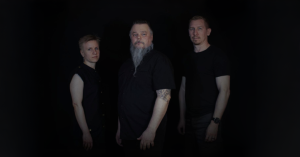
A11: We are a fully do-it-yourself band in almost every aspect. Our promo pictures have
been set up, shot, and post-produced by us, and we produce the music videos ourselves.
When Kalmo was my solo project, I wrote all the songs and played all the instruments.
Over the past year or so we have been learning how to work on songs together. There are
already co-written songs waiting to be rehearsed and released. The way of processing
ideas varies. It can start, for example, with Pekka sharing a bag of guitar riffs, which I then
take and build into a skeleton of a song. Piece by piece that skeleton gets flesh on its
bones.
I'm really happy we have been able to get that co-writing process going, and I'm looking
forward to bringing Kalmo's new drummer and 2nd guitarist into that process as well.
Q12. Working with Roland of Cavern of Echoes — what was that process like?
A12: The collaboration with Roland started during the EP Dominus Meus. I had about a
dozen songs ready then and wanted to get to the next level with Kalmo — this was when
Kalmo was still my solo project. The next level for me meant getting the sound better,
learning more about the production process, and finding a mixing and mastering
professional to work with beyond just one release. I did Dominus Meus as a learning
platform for all of that.
The working process with Roland has been smooth from the start. Right from the
beginning I felt that he is a true metalhead and very good at what he does. The way he
asks questions, proposes ideas, and genuinely engages with the songs impressed me.
Starting from Dominus Meus, he has been an integral part of Kalmo's sound development.
We look forward to working with him in the future. Actually, while responding to these
questions in early July, we have just delivered our next single material to him for mixing
and mastering, with a preliminary target to release in September 2026.
Q13. Clear vision going in or songs evolve during recording?
A13: Our way of working on songs is a structured process where each band member can
contribute at the level that feels right for them. At the composing stage, the target is to get
the song to the point where it has all the elements — instrumentation and lyrics ready.
From there it goes into a list of draft songs, waiting to be picked up for rehearsals. Once
picked, the next stage is band arrangement. During the early stages of rehearsing, we
study the song and make changes if something needs fixing. The idea at this stage is to
get the song finalized so that we have a locked version for everyone to practice toward.
Once we are happy, we finalize the documentation and start practicing full speed ahead.
At the moment, the next step has been recording the songs as a single for release. The
ideal is that we don't need to make many changes during the recording stage. Naturally,
the process is not carved in stone — if we figure something needs changing at a later
stage, we do that.
Q14. What's harder to capture — heaviness or atmosphere?
A14: Tricky question… I think it is atmosphere. You can get heaviness with tones and
piling up the wall of sound, but atmosphere is a more sensitive thing to capture.
Atmosphere is not only heaviness. It can live also in silence.
Q15. How long did "Feeding the Worms" take from idea to final master?
A15: This is a good example of the band working process that I really value. As
mentioned, the song is about three years old, written by me in my own way of thinking.
When we took it to the rehearsal list, the guitars were a bit harsher and very, very
dissonant — way more than would actually work. The chords were also complex to get
that overly dissonant sound out. Pekka reworked the guitars and made a new
arrangement while still maintaining the key idea.
We had been practicing this song as a trio for a couple of months before recording. Anu
recorded her bass at home. I have built a portable vocal booth and recorded the vocals at
home. For guitars, we recorded the baritone guitars with Pekka at our rehearsal studio,
and Pekka then recorded the D-tuned tracks at home. Drums were done with Superior
Drummer, as we didn't have a drummer of flesh and bone yet at the time.
Once all the material was recorded, we sent the package to Roland with some guiding
notes for mixing. We got the mixing done in two rounds of iteration, and mastering I think
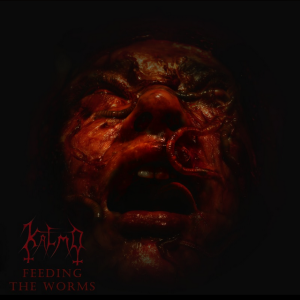
was also two rounds. The cover, music video, and marketing material were done during
the spring while we were working on the recording and mix. We have had MD/PR
handling the PR side for our songs, like this, for some time now.
Section 4: Themes, Darkness & Philosophy
Q16. What draws you toward darker subject matter?
A16: We could make songs about things on the brighter side of the street as well. But
those don't bring us the thrill we get from the stories of the shadows. It might be the
mystery we find in stories that are more twisted, odder, and darker.
Q17. Is Kalmo meant to be an escape or a confrontation?
A17: Confrontation — "doom for the damned" is not comfort music. That said, processing
the idea of death in the lyrics may help someone work through fear, grief, or anxiety in a
healthy way.
Q18. "Doom for the damned" — nihilistic, cathartic, spiritual, or something else?
A18: Not purely nihilistic — the craft and intention behind the music mean something. If
our songs serve a cathartic purpose for someone — release some emotional pressure —
we are deeply moved by that.
Q19. What role does death play in your lyrical worldview?
A19: Death is quite a central element — it is already built into the band's name: Kalmo is a
Finnish word for "corpse". Not all our songs are directly about death, but they are
somehow always linked to that realm. In "Feeding the Worms," for example, the character
experiences hell in the realm between life and death.
Q20. Was the menace and evil intentional from the beginning — rather than leaning
into sorrow?
A20: Yes, it was intentional — Kalmo was never "sad doom" or purely funeral doom.
There is a dash of sadness between the lines in some of our lyrics, but that has never
been the key element. In our recipe, the death and black metal influences inject a hostility
that pure may doom lack.
Section 5: Finland & The Underground Scene
Q21. What's unique about the Finnish underground metal scene right now?
A21: To be frank, I'm not the best person to map the whole scene — I'm more focused on
what Kalmo is doing than keeping tabs on what is going on outside. Kalmo has been
building in relative isolation for years. That's not a complaint. It just means I haven't had
my finger on the scene's pulse. What I know is that when we put music out, it finds
people.
However, Finland has always produced heavy music that sounds like it comes from
somewhere real. That ethos of rawness over polish is still present. Kalmo is part of that
lineage, even if we don't wave the flag loudly. What I can say is that when our music
reaches people in Finland, the response feels like recognition. Something in it lands. That
tells me there's an audience here that values what we value.
Q22. Is blackened doom underrated compared to other extreme metal subgenres?
A22: Well, this is difficult to say. From my personal perspective I'd say yes. It seems that
modern metalcore is getting more airtime and media attention right now. Not saying that's
bad — times change, and different genres get more or less focus. I don't see this as a
competition where someone's gain is someone's loss. As long as there are people who
find your music meaningful in their lives, in the underground scene that is enough.
Q23. How important are underground labels, podcasts, and independent stations?
A23: I think they are a very critical and integral part of the underground and in keeping the
music scene alive and breathing — away from the mainstream's polished streamlining.
From an idealistic perspective, these are people who, like the rest of us, do it for the love
of music more than anything else. Where the big players operate on Excel math, market
value, and algorithms, the people working on underground labels, podcasts, and
independent stations can talk about why this band, why now, what it connects to — and
reflect a band's music from their own perspective and taste, without being driven by the
bottom line.
Q24. Have streaming platforms helped or hurt underground doom bands?
A24: My understanding is that they hurt more than they help. The discoverability is there,
of course, but the algorithms favour the material that gets more listens, views, shares, and
likes. By definition, streaming platforms built on algorithms are designed for the
mainstream, not underground.
That said, if an underground band gets attention through a recommendation or is
discovered through an underground podcast, the songs need to be on streaming
platforms for someone to listen to them.
Money-making machines they are not. If an underground band is going to make money, it
comes from gigs and merch.
Q25. Biggest misconception about doom metal musicians?
A25: Heh, good question. Perhaps the most stereotypical misconception is that they're all
miserable, angry, or depressed all the time. Or that they only listen to the music they play.
From the music point of view perhaps one misconception could be that playing slow music
is easy. Speaking from my blues background — playing slow music is not easy.
Section 6: Live Performances & Audience Experience
We have not played live as a band yet. The original target, about two years ago when I
started inviting more members (kalmos) to the band, was that we would play our first gig
within the first year with the line-up we had during the time. Well, life has its twists and
turns. For us that meant Kalmo was a trio — Pekka, Anu, and me — for about a year.
Earlier this spring we were planning a gig without a 2nd guitarist or a drummer, with those
parts played as backing tracks. Then another twist late this spring we got a real drummer
and a 2nd guitarist. If everything goes as planned, the first Kalmo live gig is late August
this year.
Q26. How do you recreate such a dense, crushing atmosphere in a live setting?
A26: As we are in the early stages as a full lineup band, this is something we will need to
experiment with and learn as we go. But there are some visual ideas already.
The key idea is simplicity: only the band, the gear, and letting the music work its magic.
The setup preferably dark, the color scheme leaning more black than bright. Later,
perhaps some very simple visual props created by the lighting.
Q27. What emotional reaction do you hope audiences leave with after hearing
Kalmo live?
A27: The intention is not to be popcorn-and-coke entertainment — instead, weight,
confrontation, and a heaviness that remains after the music stops. Something should be
left unsettled; the subject matter shouldn't be easy to shake off. And of course, we hope it
leaves them wanting more.
Q28. Dream venue or festival?
A28: The wet dream — Wacken. �� However, as a listener, small club gigs are something
I enjoy more than big festivals. Reality will most likely be in the club scene.
Q29. Have you experienced trance-like audiences locking in during a performance?
A29: Kalmo hasn't performed live yet — the first gig is planned for August. But trance-like
locking among the audience would be phenomenal, as it would mean Kalmo's music is
reaching and touching their core.
Q30. Concert or ritual?
A30: Heavy metal live shows have a ceremonial quality that pop may not have in the
same way. From a doom perspective, the repetition of riffs, volume, darkness, slow tempo
— these elements likely create altered states in the audience. So it is a ritual.
Section 7: The Future of Kalmo
Q31. Is "Feeding the Worms" part of a larger upcoming release or concept?
A31: As Kalmo has been growing into a full band setup, releasing singles has been an
intentional goal. The songs released so far were originally planned to be part of a full
release. Getting Kalmo to a real band has been the priority over the past two years —
other goals have been secondary. Kalmo has three main goals: release music, write new
songs, and get to the stage. We have been talking about making an EP, but for now we
need to see which gets more of our focus: an EP release or getting some gigs under our
belt.
Q32. What direction do you see Kalmo evolving toward musically?
A32: The intention is to go deeper, heavier, more oppressive. As we learn more about our
process as a band, I believe the songs will have more nuances and sonic layers in them.
The rawness and a certain simplicity are things I would like to keep.
Q33. Themes or sonic territories you haven't explored yet but want to?
A33: I see this as a process of evolving as a band. The longer we write and play together,
the more influences we will bring from our backgrounds and musical preferences into
Kalmo's world. The style is not stable — it will evolve whether we want it or not, and in
Kalmo's case that is something we want, as long as the established core remains
somewhat the same.
Some of the things I'd like to experiment with are vocal harmonies and how dissonances
could be built into them. There is already one song composed where I have written vocal
harmonies for the choruses. Now that we have two guitarists, another area to explore is
different ways to build up the heaviness of the guitar wall. From a lyrical point of view, one
interesting theme to dig into is the inside of a human's head — what is going on in there
that no one else can see.
Q34. What song should a new listener start with and why?
A34: The latest three released singles are where we are at now — those would be a good
starting point. Out of those three, 'Feeding the Worms' is a good pick to start with.
Q35. What does success mean to Kalmo in today's underground metal landscape?
A35: For Kalmo, success in today's underground metal landscape means our songs
finding a real connection with a dedicated group of listeners, and through that building the
Kalmo Cult community — a real bond with people who genuinely resonate with what we
do. I'm happy to say that we already have people from different parts of the world in the
community. Regards to all of you — you know who you are.
Section 8: Fun / Personal Questions
Q36. What's the heaviest album ever made?
A36: For me, it is Hellhammer’s Apocalyptic Raids. I think I’ve already shared this story
before, but it goes back to the early 80s. I knew the EP existed, but I had never managed
to get my hands on it despite endless record-store hunting. One weekend, a friend and I
went on a trip to visit record stores in a nearby city. Apocalyptic Raids was at the very top
of my wanted list, but I had almost given up on finding it.
We stopped at one more shop — a place that mainly focused on blues and rock ’n’ roll,
but also had a section for heavy metal vinyl. After looking through some other records, I
checked the metal section too. I thought the record was gone forever, and lo and behold,
there it was: a plastic-wrapped, never-played, pristine copy of Apocalyptic Raids.
A couple of weeks later, I was playing it so loudly that I blew up my cheap stereo amp.
Q37. Which album changed your life as a musician?
A37: As a listener, in the heavy metal context, it was Celtic Frost's "Morbid Tales" — and
through that, finding the Apocalyptic Raids. From Morbid Tales it was 'The Circle of the
Tyrants' when I saw the music video on MTV.
From a non-metal context, one very important album for me is The Cramps' "Bad Music
for Bad People".
Q38. If you could collaborate with any artist living or dead, who would it be?
A38: Oh, a difficult one. Among the living, I'd love to work with Mr. Tom G. Fischer.
Among the dead ones — thinking between Lux Interior and Link Wray. This time, I'll go
with Lux.
Q39. What's something fans would be surprised to learn about Kalmo?
A39: Perhaps one surprise for fans would be a band that has influenced Kalmo's musical
style. The Cramps have been an important band for me for decades. The elements I've
taken from them into Kalmo songs are the simplicity in music and the way to condense
stories in lyrics.
Q40. What do you hope lingers in listeners' minds long after "Feeding the Worms"
ends?
A40: A weight of black soil on their chest, a physical feeling that doesn't lift immediately
when the music stops. Visceral, specific images in their head — black soil swarming with
worms, a landscape of hundreds of people buried up to their heads, consumed forever by
the worms that, like themselves, do not die. The psychological feeling of anxiety and the
enjoyment of horrors.
|

|
|


|
|